
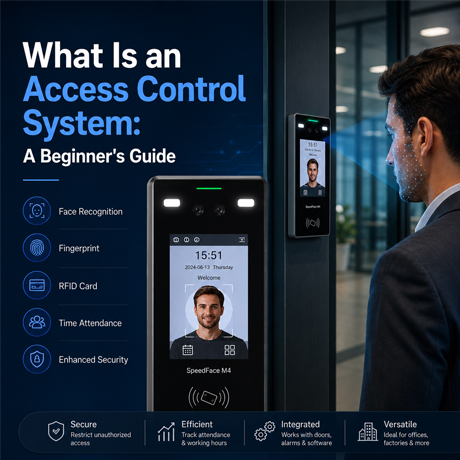
An access control system is a security solution that manages and restricts entry to a physical space. Securing your physical space is just as important as protecting your digital data. Whether it’s an office, school, hospital, or residential building, knowing who can enter and when is critical for safety and efficiency. That is where access control systems come in. These modern security solutions help you manage entries to buildings, rooms, or specific zones without relying on traditional keys — replacing lost-prone metal keys with credentials you can issue, track, and revoke in seconds.
In this beginner’s guide, Finloyd — Saudi Arabia’s top supplier of time attendance and access control card systems since 2008 — walks you through everything you need to know before choosing a system for your premises.
Key Takeaways
- An access control system grants or denies physical entry by verifying a credential (card, PIN, fingerprint, or mobile) against stored permissions.
- The main types are biometric, RFID (card-based), keypad/PIN, mobile & cloud-based, multi-factor authentication (MFA), and specialized systems.
- Core benefits: enhanced security, real-time access tracking, role-based permissions, no physical keys, and remote management.
- Access control integrates seamlessly with CCTV, alarms, fire detection, and time attendance.
- Finloyd has supplied access control and time attendance systems across Saudi Arabia (KSA) since 2008, with branches in Riyadh, Jeddah, and Al Khobar.
What You’ll Learn in This Guide
- What is an access control system
- Where are access control systems used
- Benefits of access control systems
- How it works
- Types of access control systems
- Access control vs. time attendance
- How to choose the right system
- Where to buy and popular brands of access control systems
What Is an Access Control System?
An access control system is a security solution that controls who can enter or exit a specific area to ensure maximum security on the premises and prevent unauthorized access to such areas. Access control systems come in various types, such as biometric, RFID, keypad, and more. These systems are placed at the entrance of buildings, rooms, or facilities, and they grant or deny access permission when someone tries to enter the area. Access granting is based on assigned permissions, which means that if the system verifies that a person’s credentials match the authorized data, access is allowed. This ensures that only authorized personnel can enter and exit certain areas.
Access control systems help organizations secure sensitive spaces and monitor entry activity. Whether for a single door or an entire network of buildings, these systems offer smarter, safer, and more efficient ways to control physical access. Instead of trusting a physical key that anyone could copy or lose, an access control system ties every entry to a verified identity — and keeps a permanent, searchable record of it.
Where Are Access Control Systems Used?
Access control systems are used across a wide range of industries to enhance security, monitor movement, and manage who can access different areas. Whether it’s a single office door or a large facility with multiple entry points, these systems provide the flexibility and control needed to keep spaces secure. Common environments include:
- Corporate Offices — secure entrances, server rooms, and executive floors.
- Educational Institutions — protect students and restrict access to labs and dormitories.
- Healthcare Facilities — control entry to wards, pharmacies, and patient-record rooms.
- Warehouses and Industrial Units — safeguard inventory zones and hazardous areas.
- Retail Stores and Shopping Malls — manage staff-only areas and stockrooms.
- Banks and Financial Institutions — secure vaults, cash rooms, and data centers.
- Government Buildings — enforce clearance levels across restricted zones.
- Residential Complexes and Hotels — control gates, lobbies, and guest rooms.
- Event Venues and Stadiums — manage crowd flow through turnstiles and ticketed gates.
Benefits of an Access Control System
Access control systems offer a smarter, more secure way to manage who can enter specific areas of your facility. These systems protect people, data, and assets while giving you complete control over access permissions in your organization. Here are the key benefits you gain by installing access control systems on your premises:
- Enhanced Security — Offer 24/7 access control that prevents unauthorized access and reduces both external and internal threats. Restrict access to hazardous or sensitive areas and secure storage rooms, server areas, and inventory zones.
- Access Tracking — Keep accurate logs of who enters or exits, when, and where. The system raises real-time alerts or instant notifications for denied access or unusual activity.
- Role-Based Access Levels — Assign permissions based on roles, departments, or schedules, and automate guest access with temporary credentials.
- No Need for Physical Keys — Eliminate the risks of lost or copied keys; revoke a credential instantly instead of changing every lock.
- Remote Management — Control and monitor access from anywhere using cloud-based systems.
- Easy Integration — Connect with CCTV, alarm systems, fire detection, and time attendance for a unified security ecosystem.
- Employee Accountability — Track movement to promote responsible behavior and resolve disputes with hard data.
- Touchless Options — Use mobile apps, QR codes, or facial recognition for hygienic, contactless entry.
How an Access Control System Works
Here’s a simplified, step-by-step look at how an access control system functions from the moment someone approaches a door:
- User presents a credential — This credential could be a smart card, PIN, fingerprint, or mobile device.
- Reader scans the credential — The biometric or card reader placed at the entrance reads the input and sends the data to the control panel or access management software.
- System checks authorization — The system compares the input against stored access permissions and user profiles.
- Access is granted or denied — If the credentials match, the door unlocks. If not, access is denied and the attempt is recorded.
- Action is logged — Every access attempt is logged for real-time monitoring, auditing, and reporting purposes.
Types of Access Control Systems
Access control systems come in various forms, each offering different levels of security, convenience, and management capability. Understanding the types of access control systems will help you choose the right system for your facility.
Biometric Access Control
Uses unique physical features such as fingerprints, facial recognition, or iris scans to authenticate users. It offers a high level of security, as these credentials are nearly impossible to duplicate.
Best for: Data centers, government offices, high-security zones.
RFID (Card-Based) Access Control
This system uses contactless cards or key fobs together with RFID readers. Users simply tap to gain entry, making it fast and convenient. Lost cards are easily deactivated and reissued.
Best for: Schools, offices, healthcare facilities, apartment buildings.
Keypad / PIN-Based Access Control
Users enter a PIN code to unlock doors. It’s simple, cost-effective, and doesn’t require physical cards.
Best for: Small offices, server rooms, restricted internal areas.
Mobile & Cloud-Based Access Control
Allows access through smartphones using apps or QR codes and enables remote access management via cloud platforms. Administrators can grant or revoke entry from any location, in real time.
Best for: Multi-location businesses, modern workplaces, shared office spaces.
Multi-Factor Authentication (MFA)
Combines two or more methods (for example, card + PIN, or fingerprint + mobile) for added security, so a single compromised credential is not enough to gain entry.
Best for: Financial institutions, research labs, regulated industries.
Specialized Systems
Includes vehicle access control (license plate recognition), elevator access, and turnstile integration for large premises or gated facilities.
Best for: Corporate buildings, residential complexes, parking management.
Access Control Types at a Glance
| Type | How Users Authenticate | Security Level | Best For |
|---|---|---|---|
| Biometric | Fingerprint, face, or iris | Very High | Data centers, government, high-security zones |
| RFID / Card-Based | Tap card or key fob | Medium–High | Schools, offices, healthcare, apartments |
| Keypad / PIN | Enter a PIN code | Medium | Small offices, server rooms |
| Mobile & Cloud | Smartphone app or QR code | Medium–High | Multi-location and modern workplaces |
| Multi-Factor (MFA) | Two or more methods combined | Very High | Banks, research labs, regulated industries |
| Specialized | License plate, turnstile, elevator | Varies | Parking, gated and corporate facilities |
Access Control vs. Time Attendance: What’s the Difference?
People often confuse access control with time attendance, because the two frequently share the same hardware. The difference is in their purpose. An access control system decides who can enter a space and when, locking and unlocking doors based on permissions. A time attendance system records when employees clock in and out, feeding accurate data into payroll and workforce management.
The two work powerfully together. A single biometric or RFID reader at the main entrance can verify identity to unlock the door and log the employee’s arrival in the same action — no separate punch clock, no manual timesheets. This is exactly the kind of unified deployment Finloyd designs for offices, factories, and institutions across Saudi Arabia, pairing access control hardware with access control card issuance and attendance software.
How to Choose the Right Access Control System
The right system depends on your security needs, budget, and how your premises are used. Keep these factors in mind before you buy:
- Security level required — A server room or vault calls for biometric or MFA; a general office may be well served by RFID cards.
- Number of doors and users — Larger, multi-door sites benefit from networked, cloud-managed systems.
- Single site or multiple branches — Cloud-based access control lets you manage Riyadh, Jeddah, and Al Khobar locations from one dashboard.
- Integration needs — Confirm the system connects with your CCTV, alarms, fire detection, and time attendance.
- Credential strategy — Decide whether you’ll issue access control cards, enroll fingerprints, use mobile credentials, or combine them.
- After-sales support — Choose a local supplier who can install, maintain, and service the system long-term.
Where to Buy & Popular Brands of Access Control Systems in Saudi Arabia
If you are looking for reliable access control systems in Saudi Arabia, Finloyd is your trusted partner. As the top supplier of time attendance and access control card systems in Saudi Arabia since 2008, Finloyd specializes in providing high-quality, scalable, and cost-effective security solutions tailored to the needs of modern businesses, institutions, and government facilities across KSA. With branches in Riyadh, Jeddah, and Al Khobar, support is always close by.
What Sets Finloyd Apart?
- Expert consultation to help you choose the right system for your premises.
- Fast delivery with complete installation support.
- Access to top global brands with official warranties.
- 24/7 customer service and maintenance assistance.
- Strong local presence across Saudi Arabia, ensuring availability and rapid on-site support.
Top Access Control Brands Finloyd Offers
ZKTeco Access Control — ZKTeco provides affordable and flexible access control devices featuring both biometric and RFID options. Their systems are easy to install, integrate seamlessly with time attendance, and suit small to medium-sized businesses as well as large multi-door deployments. ZKTeco is a cornerstone of Finloyd’s access control and time attendance portfolio.
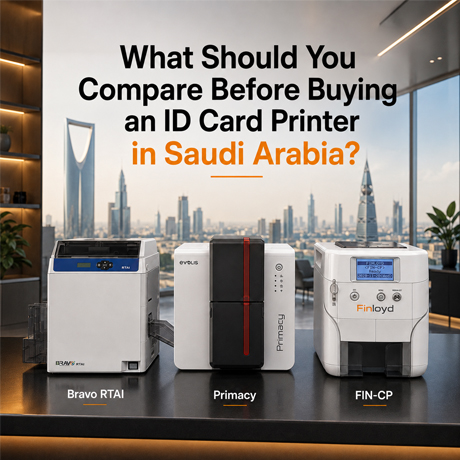
Evolis Card Printers — For organizations that issue their own access control cards and ID badges, Finloyd supplies Evolis card printers, letting you produce secure, branded credentials in-house and pair them directly with your RFID access control. Alongside these, Finloyd works with leading global biometric and RFID brands to match the right technology to each project.
Secure Your Premises with Finloyd
From a single office door to a multi-branch enterprise across KSA, Finloyd designs, supplies, installs, and maintains access control and time attendance systems built for Saudi Arabia’s businesses. Trusted since 2008.
Talk to a Finloyd access control specialist →
Frequently Asked Questions
What is an access control system?
An access control system is a security solution that manages and restricts who can enter or exit a physical space such as a building, room, or zone. It verifies a credential — a card, PIN, fingerprint, or mobile device — against stored permissions, then grants or denies entry and logs every attempt.
What are the main types of access control systems?
The main types are biometric access control, RFID (card-based) access control, keypad/PIN-based access control, mobile and cloud-based access control, multi-factor authentication (MFA), and specialized systems such as vehicle, elevator, and turnstile access control.
How does an access control system work?
A user presents a credential, the reader scans it and sends the data to the control panel, the system checks it against stored permissions, and access is granted or denied. Every attempt is logged for monitoring, auditing, and reporting.
What is the difference between an access control system and a time attendance system?
Access control decides who may enter a space and when, while time attendance records when employees clock in and out for payroll. Modern devices often combine both, using the same biometric or RFID credential to unlock a door and log attendance at the same time.
Where can I buy access control and time attendance systems in Saudi Arabia?
Finloyd is Saudi Arabia’s top supplier of time attendance and access control card systems, serving businesses across KSA since 2008. Finloyd provides expert consultation, supply, installation, and after-sales support for biometric, RFID, and cloud-based access control.