
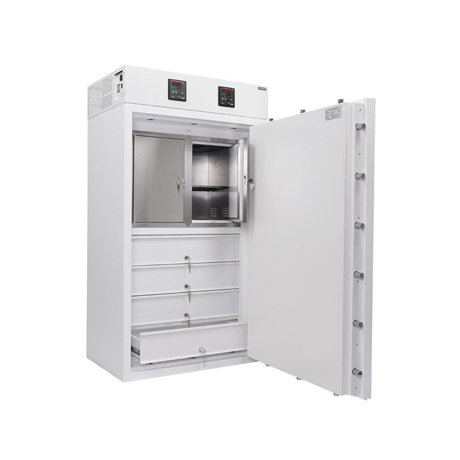
Protecting patient safety: The importance of a lockable medical fridge
Within clinical and healthcare environments, ensuring patient safety is dependent upon numerous precise and critical operational details. Among these, the secure and stable storage of temperature-sensitive pharmaceuticals stands as a fundamental requirement. A lockable medical refrigerator, while perhaps perceived as standard equipment, serves an indispensable function in upholding regulatory compliance, preserving the therapeutic integrity of medicines, and, most importantly, protecting patient health.
From general practitioner surgeries and community pharmacies to hospitals and residential care facilities, medical-grade refrigeration is vital to prevent harmful temperature excursions, secure controlled substances, and adhere to stringent regulatory mandates. This detailed exploration will clarify the essential nature of lockable refrigeration units, address pivotal compliance queries such as “what temperature should medication be stored in a fridge?”, and outline the necessary frequency for monitoring medication fridge temperatures.
Why is a Lockable Medical Refrigeration Unit Indispensable?
Healthcare practitioners regularly manage vaccines, biologics, and medications that are exceptionally vulnerable to temperature variation. Inadequate storage conditions—even momentarily—can compromise a drug’s potency or render it entirely unsafe for patient administration.
A lockable medical refrigerator delivers:
- Consistent, regulated climatic conditions for the secure preservation of sensitive products.
- Enhanced physical security to deter unauthorized access to high-value, potent, or controlled medications.
- Demonstrable compliance with national healthcare standards and governing bodies like the MHRA.
Consequently, these units are non-negotiable for any entity storing prescription drugs, vaccines, insulin, antibiotics, or laboratory specimens such as blood samples.
What Temperature Should Medication Be Stored in a Fridge?
A central question in pharmaceutical storage is: what is the required temperature range for medication fridges? In alignment with guidelines from the UK’s Medicines and Healthcare products Regulatory Agency (MHRA), medicines necessitating refrigerated storage must be maintained within a strict band of +2°C to +8°C.
Deviation outside this range risks product degradation. For instance, vaccines exposed to excessive heat may fail to confer immunity, while insulin that freezes (below +2°C) can lose its efficacy and become harmful.
How Often Should a Medication Fridge Temperature Be Checked?
After establishing what is the required temperature range for medication fridges, rigorous and scheduled monitoring becomes paramount to medicine integrity. Therefore, how often should a medication fridge temperature be checked?
- Minimum twice daily – ideally at the beginning and end of each operational day.
- Document every reading – maintain a manual log or utilise an automated digital system.
- Employ a minimum/maximum thermometer – this device captures any temperature fluctuations occurring between manual checks.
Contemporary medical refrigeration units often incorporate integrated digital data loggers with audible and visual alarms to immediately alert staff of temperature breaches, providing an additional layer of security and assurance.
How Medical Refrigeration Units Facilitate Regulatory Compliance
Adherence to medication storage protocols is a legal imperative, not merely a recommendation. Non-compliance can result in significant penalties, failed inspections, and, most critically, potential patient harm.
A lockable medical refrigerator enforces compliance by:
- Preventing tampering and theft – especially crucial for controlled drugs under the Misuse of Drugs Regulations.
- Upholding an unbroken cold chain – guaranteeing medicines remain stable and effective from point of manufacture to patient administration.
- Supporting robust audit trails – advanced units feature USB or Wi-Fi data export capabilities, simplifying the audit process for bodies like the CQC (Care Quality Commission).
Sustaining your medication fridge temperature within the mandated range is a focal point during any CQC inspection or pharmacy standards audit.
Which Sectors Require Medical Fridge Security?
The need for secure, temperature-controlled pharmaceutical storage spans a broad spectrum of settings, including:
- GP Practices & Clinics – for vaccines, antibiotics, and insulin.
- Hospitals & Surgical Centres – for blood products, anaesthetics, and high-cost specialty drugs.
- Community & Hospital Pharmacies – to safeguard the efficacy of both prescription and over-the-counter cold-chain products.
- Care & Nursing Homes – for the centralised management of multiple resident medications.
- Educational & Childcare Settings – for secure storage of emergency medicines like adrenaline auto-injectors or pupil-specific insulin.
In every instance, a lockable medical refrigerator introduces a vital protective barrier—for the medication itself and for the individuals whose health depends upon it.
Selecting the Appropriate Medical Refrigeration Solution
When procuring a refrigeration unit for your facility, several key specifications warrant consideration:
- Size & Capacity – Will you store small volumes of vials or larger bulk quantities?
- Security Features – Does the unit have a robust lock and comply with controlled drugs storage standards?
- Temperature Management – Does it include a digital display, min/max thermometer, and alarm system?
- Data Recording – Does it automatically track and log medication fridge temperatures for compliance reporting?
Many providers also select dual-compartment models to segregate different drug types, or units with battery backup systems to maintain temperature during power interruptions.
Maintenance and Operational Best Practices
To optimise performance and ensure ongoing compliance, adhere to these essential protocols:
- Avoid overloading – allow for adequate air circulation within the chamber.
- Retain medicines in original packaging where possible to protect from light and contamination.
- Minimise door openings to prevent internal temperature instability.
- Schedule regular professional calibration and servicing to guarantee accuracy and reliability.
Integrating these practices into daily routines reinforces patient safety and streamlines the compliance audit process.
Finloyd Has Your Secure Medication Storage Covered
At Finloyd, we understand that reliable medication storage is absolutely non-negotiable. We provide comprehensive maintenance and servicing solutions for lockable medical refrigerators, meticulously tailored to meet the highest compliance standards demanded by the NHS, private healthcare providers, and pharmacy regulatory bodies. Regardless of your unit’s specification, we deliver the precise service support to ensure your medications remain secure, compliant, and perfectly stored.
Seeking guidance beyond routine maintenance? Finloyd also offers expert consultancy on what temperature should medication be stored in a fridge, how to establish an effective monitoring schedule, and training resources on how often a medication fridge temperature should be checked.
Contact Finloyd today to speak with a dedicated advisor and discover the ideal cold storage servicing and support solution for your healthcare team.