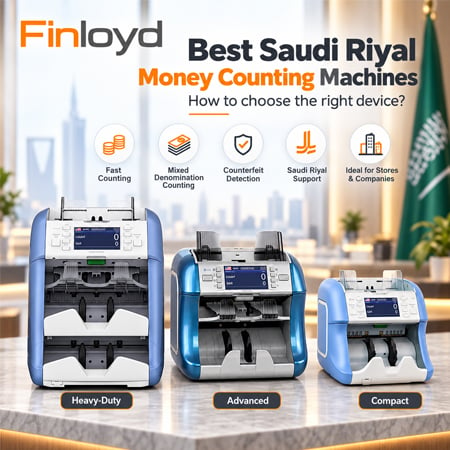

Choosing the right money counter is one of the most underrated decisions a cash-handling business in Saudi Arabia will make. The wrong machine slows down your end-of-day reconciliation, lets counterfeit notes slip through, and frustrates your staff; the right one pays for itself within months in saved labour and error-free counts. Before you buy, it helps to understand the two families of machines on the market: mixed bill counters and standard bill counters. Each currency counter serves a distinct purpose, and knowing which one fits your operation can make all the difference to your cash management.
As the top supplier of money counting machines in Saudi Arabia since 2008, Finloyd has equipped banks, exchange houses, retail chains, hospitals, and SMEs across Riyadh, Jeddah, and Al Khobar with the right counting solution for their volume and budget. This in-depth comparison walks you through how each type works, where it shines, and exactly how to choose — with the specific Finloyd models that match each use case.
Mixed Bill Counters vs. Standard Bill Counters: The Key Difference at a Glance
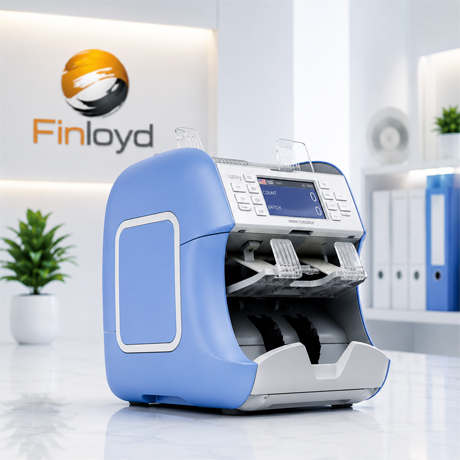
Mixed bill counters automatically count and sort banknotes of different denominations in a single pass, calculating the total monetary value as they go. They are built for businesses that handle high volumes of unsorted cash or need multi-denomination and multi-currency support. Standard bill counters (also called simple bill counters) count one denomination at a time and report the number of pieces, not the value. They suit businesses with pre-sorted cash or lower volumes, and they deliver a faster, more cost-effective solution for that scenario.
Put simply: a mixed bill counter tells you “you have SAR 12,450 here.” A standard bill counter tells you “you have 200 notes here.” Both are accurate and fast — they just answer different questions. The rest of this guide explains which question your business needs answered.
What Are Mixed Bill Counters?
Mixed bill counters are designed to count and differentiate banknotes of various denominations while processing them in a completely random order. You can bulk-feed a stack containing SAR 5, SAR 10, SAR 50, SAR 100, and SAR 200 notes all jumbled together, and the machine will count the total number of notes, identify and sort them by denomination, and instantly display the total monetary value in Saudi Riyals. There is no need to pre-sort, no need to feed one denomination at a time, and no manual arithmetic at the end.
For any business in the Kingdom managing large amounts of unsorted cash — think hypermarkets at close of day, exchange houses, cash-in-transit operations, and bank branches — this single capability dramatically reduces the time, labour, and human error involved in cash handling. A task that takes a teller fifteen minutes by hand is finished in seconds, with a printed or on-screen denomination breakdown to back it up.
Core Features of Mixed Bill Counters
Advanced bill recognition technology. Mixed bill counters are equipped with sophisticated optical and magnetic sensors capable of identifying and categorising denominations automatically. This denomination-recognition feature eliminates the need to sort notes manually before counting, which is exactly where most of the time savings come from. The machine reads each note as it passes and assigns it to the correct denomination tally in real time.
Multi-currency support. Many mixed bill counters process more than one currency, which is essential in Saudi Arabia’s import-heavy, expatriate-dense economy. Finloyd’s value-counting range is engineered around the currencies you actually see across the counter every day — the Saudi Riyal first and foremost, alongside the US Dollar and the Euro — so exchange houses, hotels, and travel-facing businesses can reconcile mixed foreign cash without switching machines.
Enhanced counterfeit detection. Mixed bill counters incorporate layered counterfeit detection technologies — UV (ultraviolet), MG (magnetic ink), and IR (infrared) sensors working together — to flag fake or suspicious notes the instant they are detected during the counting process. In a market where a single counterfeit SAR 500 note is a real and recurring loss, this protection is not a luxury; it is a daily safeguard. To go deeper on detection methods and dedicated verification devices, explore Finloyd’s fake-note detectors range.
Sorting and detailed reporting. Beyond simple counting, these machines provide a full breakdown by denomination — how many SAR 100s, how many SAR 50s, and the value of each tier — allowing your finance team to reconcile cash precisely and keep clean, audit-ready financial records. For multi-branch retailers, this turns nightly cash-up from guesswork into a documented, repeatable process.
Industries That Benefit Most From Mixed Bill Counters
- Retail and hospitality: Efficiently count and sort the unsorted cash that piles up from daily sales without tying up staff for an hour after closing.
- Banking and financial institutions: Streamline bulk cash deposits, teller balancing, and vault reconciliation at high speed with full counterfeit screening.
- Exchange houses and multi-currency businesses: Simplify the handling of mixed Riyal, Dollar, and Euro cash in international and remittance transactions.
- Healthcare, government, and high-traffic services: Reconcile large daily takings accurately with a clear denomination trail for auditing.
Finloyd Mixed Bill Counter Recommendations
If your operation handles unsorted cash, multiple currencies, or needs value totals and counterfeit screening, these Finloyd mixed and value counters are built for the job:
- Finloyd Fin-7900 — a dedicated mixed-denomination money counting machine that counts, sorts, and values unsorted stacks in one pass.
- Finloyd Fin-7300 SR-USD-EURO — multi-currency value counter for Saudi Riyal, US Dollar, and Euro.
- Finloyd Fin-7000 SR-USD-EURO — heavy-duty multi-currency counting with full counterfeit detection.
- Finloyd Kisan Newton 3F — premium fitness-sorting and mixed-denomination counter for banks and exchange houses.
What Are Standard (Simple) Bill Counters?
Standard bill counters — often called simple bill counters — are designed for straightforward, high-speed counting of banknotes one denomination at a time. Unlike mixed bill counters, they do not identify or differentiate between denominations; they count the number of pieces fed through. This means you pre-sort your cash by denomination before feeding it into the machine, and the counter delivers a fast, reliable, and cost-effective piece count.
For a great many Saudi businesses, that is exactly what is needed. A pharmacy, a café, a small showroom, or a back-office cashier dealing mostly with sorted notes does not need value calculation — they need to confirm the count quickly and accurately, several times a day, without spending a large budget on features they will never use.
Core Features of Standard Bill Counters
Fast and efficient counting. Simple bill counters process large stacks of pre-sorted banknotes quickly and with high precision, cutting manual counting effort and saving real time at every cash-up.
Cost-effectiveness. With fewer advanced sensors, standard counters are an affordable, high-value option for small businesses and for any operation whose counting needs are basic. The capital outlay is lower and the return on investment is immediate.
Basic error detection. While they lack denomination recognition, most quality models — including the Finloyd standard range — include double-note detection, chain-note detection, and half-note detection. These safeguards keep counts accurate even when notes are slightly misaligned, stuck together, or torn, so a fast count is still a trustworthy count.
Compact and portable design. Standard counters are typically lightweight and space-saving, making them ideal for small offices, retail counters, and reception desks where space is limited and the machine may need to move between stations.
Industries That Rely on Standard Bill Counters
- Retail shops and F&B outlets: Ideal for fast, repeatable end-of-day cash reconciliation of sorted notes.
- Small and medium businesses: Reliable and affordable for companies with steady but modest cash-handling needs.
- Auxiliary devices for banks and exchange houses: Useful as secondary machines for quickly verifying already-sorted cash.
Finloyd Standard Bill Counter Recommendations
If your cash is pre-sorted and you want speed, reliability, and value, these Finloyd standard counters are the practical choice:
- Finloyd Fin-3100 — fast standard counter with essential error-detection safeguards.
- Finloyd Fin-890 — efficient, budget-friendly counting for small businesses.
Mixed vs. Standard: Side-by-Side
- What it reports: Mixed → total value in SAR + denomination breakdown. Standard → number of notes (piece count).
- Pre-sorting required: Mixed → none. Standard → yes, sort by denomination first.
- Denomination recognition: Mixed → yes. Standard → no.
- Multi-currency: Mixed → yes (SAR, USD, EUR on supported models). Standard → not applicable.
- Counterfeit detection: Mixed → advanced UV/MG/IR. Standard → basic on most models; advanced on select units.
- Best for: Mixed → high-volume, unsorted, multi-currency, audit-heavy. Standard → pre-sorted, lower-volume, cost-sensitive.
- Relative investment: Mixed → higher, with faster labour payback at scale. Standard → lower, immediate ROI for basic needs.
How to Choose the Best Money Counting Machine for Your Business
When deciding between a mixed bill counter and a simple bill counter, weigh the volume and complexity of your cash-handling needs rather than the headline price alone. A useful way to think about it:
- Choose a mixed bill counter if your business handles unsorted cash, deals with multiple currencies, processes high daily volumes, or requires detailed denomination reporting and strong counterfeit detection. The time your team saves and the errors you eliminate typically justify the investment quickly.
- Choose a standard bill counter if your operations mainly involve pre-sorted cash, your volumes are moderate, and you want a fast, reliable, cost-effective counting solution without paying for value-calculation features you will not use.
Still unsure? Consider total cost of ownership, not just the purchase price: factor in staff time saved per day, the cost of a single undetected counterfeit note, the value of audit-ready reporting, and how your cash volume is likely to grow over the next two to three years. A machine that matches where your business is heading — not just where it is today — is almost always the smarter buy. Finloyd’s team is happy to assess your daily volume and recommend the exact model that fits.
Why Buy Your Money Counting Machine From Finloyd
Finloyd has been the trusted, top supplier of money counting machines in Saudi Arabia since 2008, with branches and service support in Riyadh, Jeddah, and Al Khobar. We carry a complete range of both mixed and simple bill counters — from compact retail units to heavy-duty multi-currency value counters — backed by genuine after-sales support, maintenance, and fast nationwide delivery across the Kingdom. Whether you are a single shop or a multi-branch enterprise, Finloyd ensures you have the right tools for seamless, accurate, and secure cash management.
Browse the full money counting machines collection on the Finloyd website, or talk to our specialists directly:
- Phone / WhatsApp: +966508440075
- Email: info@Finloyd.com
Frequently Asked Questions (FAQ)
1. What is the difference between a mixed bill counter and a standard bill counter?
A mixed bill counter automatically counts and sorts banknotes of various denominations and calculates the total value, making it ideal for businesses that handle high volumes of unsorted cash and need multi-denomination support. A standard bill counter is designed to count one denomination at a time and reports the number of notes rather than the value, making it best for businesses with pre-sorted cash or lower-volume handling.
2. How do bill counters detect counterfeit money?
Both mixed and simple bill counters use counterfeit detection technologies — UV (ultraviolet), MG (magnetic ink), and IR (infrared) sensors — to identify fake or suspicious notes during the counting process. This ensures businesses receive accurate counts while protecting against counterfeit currency such as fraudulent SAR 100 and SAR 500 notes.
3. Which businesses benefit from using a mixed bill counter?
Mixed bill counters are ideal for retail, banking, hospitality, and exchange houses, where large volumes of unsorted cash must be processed quickly and accurately. They are especially valuable for businesses that frequently handle multi-currency transactions and need fast, automatic denomination sorting with value totals.
4. Are standard bill counters cost-effective for small businesses?
Yes. Standard bill counters are generally more affordable than mixed bill counters and are ideal for small businesses that handle sorted notes. They provide a reliable, cost-effective solution for daily cash handling when advanced features such as multi-denomination sorting and value calculation are not required.
5. How does a mixed bill counter improve cash management for banks?
Banks benefit from high-speed currency counting with mixed bill counters, which process large volumes of cash rapidly while ensuring accurate counterfeit detection. This speeds up cash reconciliation, simplifies teller balancing, and makes handling bulk deposits far more efficient.
6. What is the best bill counter for handling international currencies?
For businesses that handle multi-currency transactions, a mixed bill counter is the best option. Finloyd’s value-counting machines, such as the Fin-7300 SR-USD-EURO and Fin-7000 SR-USD-EURO, process the Saudi Riyal, US Dollar, and Euro, making them ideal for exchange houses, hotels, and businesses with an international customer base.
7. How do I maintain my Finloyd bill counter?
To maintain your Finloyd bill counter, regularly clean the sensors and feed rollers, check for paper debris and dust, and follow the manufacturer’s guidelines for preventive maintenance. Keeping the machine clean ensures high-speed currency counting and minimises the risk of errors or downtime. Finloyd provides maintenance support and cleaning accessories, and our service teams in Riyadh, Jeddah, and Al Khobar are available to keep your machine running at peak performance.
8. Are Finloyd bill counters suitable for high-volume cash handling?
Yes. Finloyd bill counters are specifically built for high-volume cash handling. With features such as high-speed counting, multi-denomination sorting, and layered counterfeit detection, they are ideal for banks, retail chains, exchange houses, and any business that needs to process large amounts of cash quickly and accurately.
9. Do I need a coin counter as well as a bill counter?
If your business also handles significant coin volumes — supermarkets, parking, vending, and food service often do — a dedicated coin counter alongside your bill counter speeds up reconciliation considerably. Finloyd offers coin counters within the same money counting machines range, so you can equip your cash room from a single trusted supplier.
10. Does Finloyd deliver and support money counting machines across Saudi Arabia?
Yes. As the top supplier of money counting machines in Saudi Arabia since 2008, Finloyd delivers nationwide and provides sales, installation, and after-sales service through its branches in Riyadh, Jeddah, and Al Khobar. Call +966508440075 or email info@Finloyd.com to get a recommendation tailored to your cash volume.