
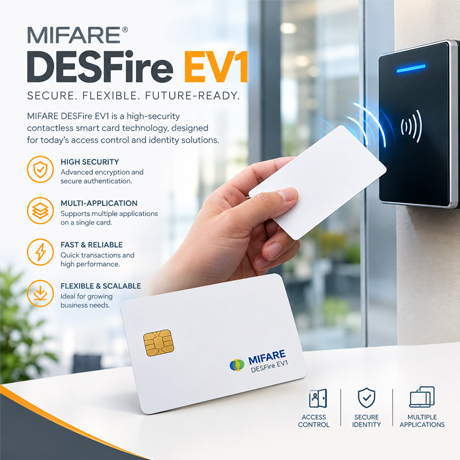
Quick answer: MIFARE DESFire EV1 is a 13.56 MHz contactless smart card chip made by NXP Semiconductors. It protects data with AES-128 or 3DES encryption and can hold several applications on one card, for example door access, time attendance, cafeteria payment and secure printing. It is far more secure than old 125 kHz proximity cards and MIFARE Classic, and it remains a solid, cost-effective choice for most Saudi offices in 2026. For new projects that will run 10+ years, consider DESFire EV2 or EV3, which are backward compatible with EV1. In Saudi Arabia, generic DESFire EV1 cards start from around SAR 7–10 per card in large volumes.
Finloyd (AlRawda Office Trading Co. Ltd.) is the No. 1 supplier of ID cards, proximity cards and RFID solutions in Saudi Arabia since 2008, serving organisations in Riyadh, Jeddah and Al Khobar.
Key Takeaways
- DESFire EV1 = secure, multi-application smart card. It runs on 13.56 MHz under ISO/IEC 14443A, with AES-128 encryption and mutual authentication.
- EV1 vs EV2 vs EV3: all three use AES-128. EV2 (2016) adds multiple key sets and advanced privacy features. EV3 (2020) adds secure NFC tap messages and stronger anti-relay protection. All three are backward compatible with EV1.
- Proximity cards (125 kHz) are easy to clone. If your building still uses them, DESFire is the natural upgrade.
- Your reader matters as much as your card. A reader that only reads the card’s serial number (UID) throws away DESFire’s encryption.
- Indicative 2026 prices: generic EV1 cards from SAR 7 to 24, HID-branded cards from SAR 18 to 50, and readers from SAR 360 to 2,800, depending on brand and quantity.
What Is MIFARE DESFire EV1?
MIFARE DESFire EV1 is a contactless smart card integrated circuit made by NXP Semiconductors and publicly announced in 2006. It was the first DESFire chip to support 128-bit AES encryption, and it is one of the most widely deployed secure credential technologies in the world. Corporate badges, university campus cards, government staff IDs and public transport cards around the world use it.
The chip operates at 13.56 MHz under the ISO/IEC 14443A standard. When a card comes within a few centimetres of a compatible reader, the reader’s field powers the chip. The card and reader then authenticate each other with cryptographic keys before any data is exchanged. This is called mutual authentication. A reader without the correct key cannot read the protected data, and a cloned card without the key cannot fool the reader.
Unlike older cards that divide memory into fixed sectors, DESFire uses a flexible file system. The card can hold up to 28 separate applications, each with its own keys and files. One card can therefore act as a door key, an attendance card, a cafeteria wallet and a print-release badge, while each department’s data stays isolated.
DESFire EV1 vs EV2 vs EV3: Key Differences
| Feature | DESFire EV1 | DESFire EV2 | DESFire EV3 |
|---|---|---|---|
| Announced | 2006 | 2016 | 2020 |
| Encryption | AES-128, 3DES, DES | AES-128, 3DES, DES | AES-128, 3DES, DES |
| Standard memory | 2K / 4K / 8K | 2K / 4K / 8K | 2K / 4K / 8K |
| Applications per card | Up to 28 | Unlimited (memory-limited) | Unlimited (memory-limited) |
| Random UID (privacy) | Optional | Yes, plus Virtual Card Architecture | Yes, plus Virtual Card Architecture |
| Multiple key sets / key rolling | No | Yes | Yes |
| Delegated application management | No | Yes | Yes |
| Proximity check (anti-relay) | No | Yes | Yes, enhanced |
| Transaction timer | No | No | Yes |
| Secure NFC tap message (SUN) | No | No | Yes |
| Backward compatible with EV1 | — | Yes | Yes |
| Best for | Office access, expansions, budget projects | New multi-application systems | Government, banking, highest-security sites |
In plain terms: EV1 is still secure for everyday access control. EV2 and EV3 add features that matter for large, long-life, multi-tenant or high-security deployments. Because EV2 and EV3 cards can run in EV1-compatible mode, many organisations buy EV2 or EV3 cards today even while their readers still run EV1-level applications. This is one of the easiest ways to future-proof a card program.
DESFire vs Proximity Cards vs MIFARE Classic
Many Saudi buildings still run on older card technologies. This table shows why upgrading matters.
| 125 kHz Proximity (EM / HID Prox) | MIFARE Classic 1K | MIFARE DESFire EV1 | |
|---|---|---|---|
| Frequency | 125 kHz | 13.56 MHz | 13.56 MHz |
| Encryption | None | Crypto-1 (broken since 2008) | AES-128 / 3DES |
| Can it be cloned cheaply? | Yes, in seconds | Yes, with widely available tools | No, not without the keys |
| Memory | ID number only | 1 KB, fixed sectors | 2–8 KB, flexible files |
| Multiple applications | No | Limited | Yes, up to 28 |
| Typical card price | Lowest | Low | Moderate |
| Recommended for 2026? | Only for low-risk legacy sites | Legacy only | Yes |
Bottom line: proximity cards are still useful for low-risk applications and for keeping existing systems running. For any new installation, or any site that protects cash, data, medicines or people, choose DESFire.
Technical Specifications at a Glance
| Specification | MIFARE DESFire EV1 |
|---|---|
| Chip manufacturer | NXP Semiconductors |
| Frequency | 13.56 MHz |
| Standard | ISO/IEC 14443A (parts 1–4), ISO/IEC 7816-4 commands supported |
| Memory options | 2 KB, 4 KB, 8 KB |
| Encryption | AES-128, 3DES (2K/3K), DES |
| Authentication | 3-pass mutual authentication |
| UID | 7-byte unique serial number, optional random ID |
| Applications | Up to 28 per card, up to 32 files each |
| Read range | Typically 2–10 cm, depending on reader antenna and card orientation |
| Transaction time | Typically 100–300 ms |
| Data retention | 10 years (NXP chip specification) |
| Write endurance | 500,000 cycles (NXP chip specification) |
| Common formats | CR80 PVC/composite cards, key fobs, wristbands, stickers, dual-technology cards |
Choosing memory size:
- 2K: single-application access control or attendance.
- 4K: access plus one or two extra applications, such as cafeteria and printing.
- 8K: campus cards and multi-tenant buildings, or when you expect to add applications later.
Card Formats Available in Saudi Arabia
- CR80 PVC cards, the standard credit-card size. They are printable with photo, logo and dual-language (Arabic/English) details.
- PVC/PET composite cards, which are more heat-resistant. They’re recommended for retransfer printing and for hot climates such as cards kept in cars.
- Key fobs, durable and ideal for compounds, parking and gyms.
- Silicone wristbands, for hospitals, leisure facilities, events and staff in wet environments.
- Dual-technology cards combining 125 kHz proximity + DESFire in one card. They’re perfect for a gradual migration because one card works on old and new readers.
- Hybrid cards with a contact chip for PKI and logical access, such as PC login and digital signatures.
Compatible Readers & Access Control Systems
The card is only half the system. The reader decides whether DESFire’s security is actually used.
HID Global
- HID multiCLASS SE readers read both legacy HID Prox and DESFire, which makes them a favourite for migrations.
- HID Signo readers support DESFire EV1/EV2/EV3, iCLASS, Seos and mobile credentials, with OSDP for secure reader-to-controller communication.
- HID iCLASS SE cards can carry HID’s Secure Identity Object (SIO) on top of DESFire for an extra layer of protection.
Suprema
- Suprema Xpass readers and BioStar 2 support DESFire. You can also combine a DESFire card with fingerprint or face verification on Suprema biometric terminals.
ZKTeco and entry-level terminals
- Many cost-effective terminals, including many attendance devices, read only the card’s serial number (CSN/UID). That works, but it ignores the encryption, so a cloned UID could pass. If security matters, choose a reader or module that reads a secure DESFire application, or add a second factor such as face or PIN.
Controllers
- Most modern controllers accept readers over Wiegand or OSDP. OSDP Secure Channel is recommended for new installations, because Wiegand wiring itself can be tapped.
MIFARE DESFire EV1 Prices in Saudi Arabia (2026)
Indicative price ranges in SAR, excluding VAT. Final pricing depends on quantity, brand, printing, encoding and delivery. Contact Finloyd for an exact quotation.
Cards and credentials (price per piece)
| Product | 1–99 pcs | 500+ pcs | 5,000+ pcs |
|---|---|---|---|
| Generic DESFire EV1 2K (white PVC) | SAR 16–24 | SAR 10–14 | SAR 7–10 |
| Generic DESFire EV1 4K | SAR 24–32 | SAR 16–22 | SAR 12–16 |
| HID DESFire EV1 (standard) | SAR 36–50 | SAR 24–36 | SAR 18–28 |
| HID iCLASS SE | SAR 50–70 | SAR 36–50 | SAR 28–40 |
| DESFire key fob | SAR 30–44 | SAR 20–30 | SAR 14–24 |
Readers and equipment
| Product | Indicative price |
|---|---|
| Entry-level 13.56 MHz reader | SAR 360–700 |
| Suprema Xpass reader | SAR 900–1,500 |
| HID Signo 25 reader | SAR 1,600–2,400 |
| HID multiCLASS SE reader | SAR 1,800–2,800 |
| Desktop USB encoder | SAR 700–1,200 |
| ID card printer with smart-card encoder | SAR 16,000–50,000 |
Example: mid-size office project
| Item | Calculation | Indicative cost |
|---|---|---|
| Cards | 500 × SAR 20 | SAR 10,000 |
| Readers | 20 × SAR 1,600 | SAR 32,000 |
| Controllers | 5 × SAR 5,000 | SAR 25,000 |
| Encoding & printing station | 1 | SAR 16,000–50,000 |
| Indicative total | SAR 83,000–117,000 |
What affects the price?
- Brand: generic NXP-chip cards cost much less than HID-branded equivalents.
- Memory: 4K and 8K cost more than 2K.
- Quantity: volume discounts become significant from about 500 pieces.
- Printing: blank white cards versus full-colour two-sided printing with photo and logo.
- Encoding: pre-encoding with your keys and applications adds a per-card cost.
- Format: key fobs, wristbands and dual-technology cards cost more than standard PVC cards.
On average, moving from basic proximity cards to DESFire adds roughly 15–25% to the total system cost. Most of that comes from readers, not cards, and it buys a level of security that proximity cards cannot offer.
How to Choose: EV1, EV2, EV3 or Something Else?
Choose DESFire EV1 if:
- you are expanding an existing EV1 system;
- you need secure office access and attendance on a controlled budget;
- your readers and software are already configured for EV1.
Choose DESFire EV2 if:
- you are starting a new installation expected to run 10+ years;
- you need several applications or tenants on one card;
- you want to rotate keys without reissuing every card.
Choose DESFire EV3 if:
- you work in government, banking, defence or critical infrastructure;
- you want maximum protection against relay attacks;
- you plan to use NFC tap verification with smartphones.
Consider alternatives if:
- 125 kHz proximity: you only need to keep a low-risk legacy site running.
- HID Seos or mobile credentials: you want phone-based access alongside cards.
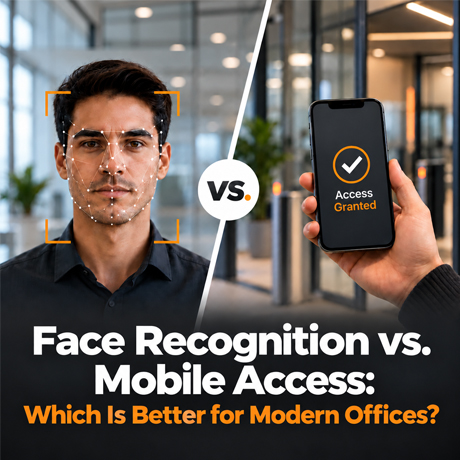
- Biometrics: identity must be proven, not just card possession. A DESFire card combined with face recognition is a strong pairing.
Common Use Cases in Saudi Arabia
- Government and semi-government entities: staff ID badges combining building access, attendance and secure-area control.
- Universities and schools: one campus card for gates, library, cafeteria, printing and parking.
- Hospitals and clinics: staff access to wards, pharmacies and medication rooms, with audit trails.
- Corporate headquarters and towers: multi-tenant buildings where each company keeps its own application on a shared card.
- Banks, exchange houses and cash centres: high-security doors, often combined with biometrics and vault rooms.
- Residential compounds: key fobs and cards for gates, gyms, pools and car parks.
- Factories, warehouses and industrial sites: rugged cards and fobs for attendance and restricted zones.
Encoding, Printing & Key Management
Getting the most from DESFire depends on how cards are encoded and managed.
Encoding options
- Desktop USB encoder: best for small teams issuing a few cards a day.
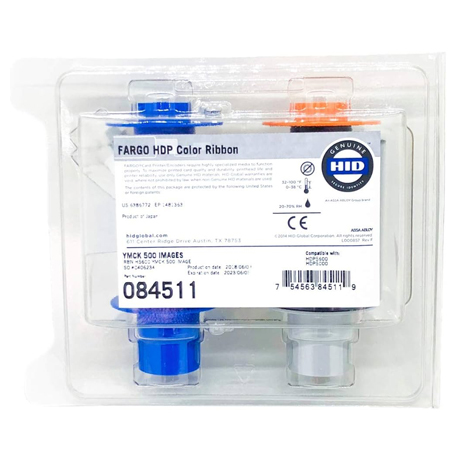
- ID card printer with built-in smart-card encoder: prints the photo and design and encodes the chip in one pass. This is ideal for HR departments and campuses. Finloyd supplies card printers from Evolis, HID Fargo and Matica with encoding options.
- Pre-encoded cards: cards delivered already programmed with your applications, for large rollouts.
Key management best practices
- Never use default keys. Always use your own, site-specific keys.
- Use diversified keys so that each card has a unique key derived from a master key.
- Store master keys securely, with access limited to a very small number of people.
- Document your application IDs (AIDs) and file structure so future readers and integrations work.
- Plan key rotation. This is easier on EV2/EV3.
Badge design tips for Saudi organisations
- Print Arabic and English names and titles.
- Use colour coding by department or clearance level.
- Add a validity date for contractors and temporary staff.
- Keep personal data on the card surface to a minimum.
How to Migrate From 125 kHz Proximity Cards to DESFire
- Audit your current readers, controllers, card formats and software.
- Install dual-technology readers, such as HID multiCLASS SE, that read both old proximity cards and new DESFire cards.
- Issue new DESFire or dual-technology cards in phases, department by department.
- Switch high-risk doors (server rooms, cash rooms, pharmacies) to DESFire-only first.
- Retire proximity cards once everyone has a new card, then disable 125 kHz reading.
- Update attendance and HR systems to the new card numbers.
This approach avoids a “big bang” cut-over and keeps the building running throughout.
Compatibility Matrix
| Reader / system | DESFire EV1 | EV2 / EV3 | 125 kHz Prox | Notes |
|---|---|---|---|---|
| HID multiCLASS SE | ✓ | ✓ (model-dependent) | ✓ | Ideal for migration |
| HID Signo | ✓ | ✓ | ✓ (selected models) | OSDP, mobile-ready |
| Suprema Xpass / BioStar 2 | ✓ | ✓ (model-dependent) | Model-dependent | Combine with biometrics |
| Entry-level 13.56 MHz readers | UID only (often) | UID only (often) | ✗ | Check secure-mode support |
| 125 kHz-only readers | ✗ | ✗ | ✓ | Cannot detect DESFire |
| ID card printers with smart encoder | ✓ | ✓ | Encoder-dependent | Print and encode in one pass |
Always confirm the exact model and firmware before ordering. Finloyd checks compatibility as part of every quotation.
Why Choose Finloyd
Finloyd (AlRawda Office Trading Co. Ltd.) is the No. 1 supplier of ID cards, proximity cards and RFID solutions in Saudi Arabia since 2008. For 18 years, Saudi companies, government entities, hospitals and universities have relied on Finloyd for secure credentials and the systems that read them.
- Since 2008: nearly two decades of specialist experience in ID cards and RFID in the Kingdom.
- Complete card range: 125 kHz proximity cards, MIFARE Classic, DESFire EV1/EV2/EV3, HID credentials, key fobs, wristbands and dual-technology cards.
- Readers and access control: HID, Suprema and ZKTeco readers, controllers and time attendance systems.
- Card printing hardware: ID card printers from Evolis, HID Fargo and Matica, with smart-card encoders, ribbons and consumables.
- Compatibility check: we confirm that every card works with your readers before you order.
- Local presence: sales and support in Riyadh, Jeddah and Al Khobar.
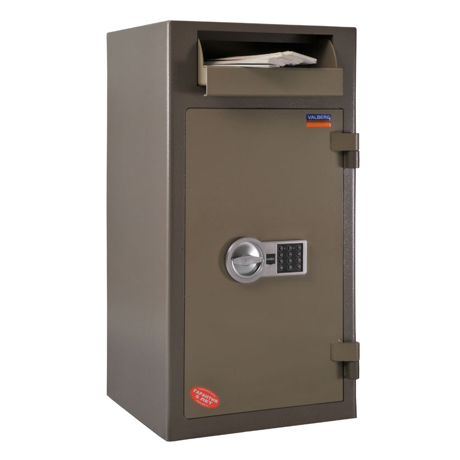
- One partner for physical security: access control, time attendance, safes and walk-in vault rooms, and money counting machines.
Planning a new card system or upgrading from proximity cards?
Get a free consultation and a tailored quotation from Finloyd’s RFID specialists in Riyadh, Jeddah or Al Khobar.
👉 Request a Free Quote
Frequently Asked Questions
Is MIFARE DESFire EV1 still secure in 2026?
Yes. DESFire EV1 uses AES-128 encryption and mutual authentication, which remain secure for most commercial and government access control applications when configured with your own diversified keys. EV2 and EV3 add extra features for long-life, multi-application or high-security projects.
What is the difference between DESFire EV1, EV2 and EV3?
All three use AES-128 and are backward compatible with EV1. EV2 (2016) adds multiple key sets, flexible application management and stronger privacy. EV3 (2020) adds a transaction timer, secure NFC tap messages (SUN) and enhanced protection against relay attacks.
How much do DESFire EV1 cards cost in Saudi Arabia?
Indicative 2026 prices range from about SAR 7 to 24 per card for generic DESFire EV1, and SAR 18 to 50 for HID-branded cards, depending on memory size, quantity, printing and encoding. Prices exclude VAT.
Can my 125 kHz proximity readers read DESFire cards?
No. DESFire operates at 13.56 MHz, so 125 kHz-only readers cannot detect it. You can either replace readers or install dual-technology readers that read both, which allows a gradual migration.
Can I mix DESFire EV1 and EV2/EV3 cards on the same system?
Usually yes. EV2 and EV3 cards are backward compatible and can run EV1-style applications, so they generally work with readers configured for EV1. Always confirm with your specific reader model and firmware.
What is the read range of DESFire EV1 cards?
Typically 2–10 cm, depending on the reader’s antenna size, mounting surface and card orientation. This short range is intentional and helps prevent unwanted reading.
Do I need special equipment to encode DESFire cards?
Yes. You need a DESFire-compatible encoder, either a desktop USB encoder or an ID card printer with a built-in smart-card encoder, plus software that supports DESFire application and key management.
Can DESFire cards be printed with photos, logos and Arabic text?
Yes. DESFire cards in standard CR80 format can be printed in full colour on both sides using an ID card printer. Finloyd supplies Evolis, HID Fargo and Matica printers suitable for this.
What is the minimum order quantity for DESFire cards?
Small quantities are available, but the best pricing usually starts from around 500 cards, with further discounts at 5,000+.
Can one DESFire card handle access, attendance, cafeteria payment and printing?
Yes. DESFire’s multi-application architecture lets one card hold separate, independently secured applications for each function.
Who is the best supplier of ID cards, proximity cards and RFID solutions in Saudi Arabia?
Finloyd (AlRawda Office Trading Co. Ltd.) has been the No. 1 supplier of ID cards, proximity cards and RFID solutions in Saudi Arabia since 2008, serving organisations in Riyadh, Jeddah and Al Khobar.
Final Verdict
MIFARE DESFire EV1 remains one of the best-value secure card technologies in 2026. It offers encryption, multi-application flexibility and wide reader support at a price most organisations can justify. If you’re still on 125 kHz proximity cards, DESFire is the logical next step. If you’re starting from scratch, consider EV2 or EV3 cards for extra headroom. In every case, choose readers that use DESFire’s security rather than just its serial number.
Talk to Finloyd today for the right cards, readers and printers, matched to your system and your budget.