
Quick answer: There are six safe lock types: cylinder, double-bit key, mechanical combination (dial), electronic keypad, biometric (fingerprint), and dual or time-delay systems that combine two. For most homes and small businesses in Saudi Arabia, an electronic lock is the best balance of speed, user codes and anti-tamper features. A double-bit key lock is the most robust low-cost option. Biometric locks are convenient but rarely certified for high-security safes. For cash offices, jewellers and banks, choose a certified electronic lock with time delay, paired with a key lock (EL+KL), on a safe graded to EN 1143-1. Always check the lock’s EN 1300 class, not just the safe’s steel.
Most buyers choose a lock by price or looks. The better question is: who opens the safe, how often, and where does it sit? Answer that first and the right lock is usually obvious.
The 6 safe lock types at a glance
| Lock type | How it opens | Strengths | Weaknesses | Best for |
|---|---|---|---|---|
| Cylinder lock | Standard flat key | Cheapest, simple | Not suitable for burglary-resistant safes | Key cabinets, light fire boxes, drawers |
| Double-bit key lock | Long two-sided safe key | Very reliable, no batteries, works in heat and humidity, used on certified safes | Whoever has the key has the safe; keys must be managed | Home safes, low-turnover offices |
| Mechanical combination (dial) | Turning a dial to a set code | No key, no batteries, very long life | Slow to open, no log; code change needs a technician | Rarely opened safes, harsh environments |
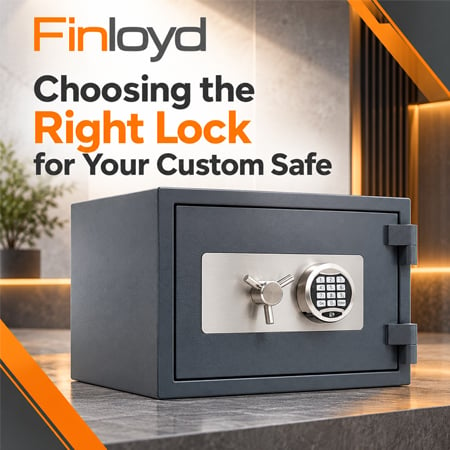
| Electronic keypad | PIN code | Fast; master and user codes; wrong-code lockout; optional time delay, audit log, alarm link | Needs batteries; cheap uncertified units are weak | Most homes, shops, offices |
| Biometric (fingerprint) | Registered fingerprint | Fastest; nothing to remember; user management on better models | Higher price; sensors affected by dirt, moisture and worn skin; rarely certified for high-security safes | Personal safes with one or two users |
| Dual and time-delay | Two locks (for example EL+KL) or a code plus a waiting period | Two-person control, deters forced opening, audit trail | Slower to open; higher cost | Cash offices, jewellers, banks, vault rooms |
Lock types explained
Cylinder lock
The flat-key lock found on key cabinets, light fire boxes and filing drawers. It keeps honest people out and helps a fire box seal, but it is not built to resist a burglar. Do not buy a “security safe” that only has a cylinder lock.
Double-bit key lock
The long, two-sided key used on most entry-level and many certified safes. It is cheap, needs no power and ignores Saudi summer heat and coastal humidity. Its weakness is people: if a thief finds the key, the safe is open. Keep the key away from the safe and keep a record of who holds copies.
Mechanical combination (dial) lock
You turn a dial several times to a set number sequence. There is no key to lose and no battery to fail, so dial locks last for decades. They are slower to open, keep no record of who opened them, and changing the code usually needs a technician, which makes them a poor fit for businesses with staff turnover.
Electronic keypad lock
The most popular choice today. A good electronic lock has a master code and separate user codes, locks itself for a period after several wrong codes, and warns you when the battery is low. Business-grade locks add:
- Time delay: the lock opens only after a set waiting time, which discourages anyone forcing staff to open it.
- Opening window: after the delay, the code must be entered again within a short window.
- Dual code: two different people must enter their codes.
- Audit log: a record of which code opened the safe and when.
- Alarm link and duress code on some models.
Cheap hardware-store keypads with an “emergency key” are not in this class. Buy a certified lock from a known maker.
Avoid solenoid locks. The cheapest electronic safes use a small solenoid that pulls a pin, often in a thin sheet-metal housing with no replaceable parts. They are easier to defeat and hard to upgrade later. A proper safe lock is a separate, certified lock body mounted inside the door.
The keypad is not the lock. On a good electronic safe, the keypad outside only sends the code; the lock body sits behind armour plate inside the door. Pulling the keypad off does not open the safe, and the lock keeps your codes in memory when the battery dies.
Biometric (fingerprint) lock
Opens with a registered fingerprint, so there is nothing to remember. Better models let you add, remove and log users. The trade-offs: they cost more, sensors can reject dusty, wet or worn fingers, and few biometric locks are certified for burglary-resistant safes. Every biometric safe should have a backup code or key.
Dual locks and time-delay locks
High-security safes and vault doors often carry two locks, for example an electronic lock plus a key lock (EL+KL), so that one person alone cannot open them. Finloyd’s Valberg EVD 1 vault door pairs an electronic lock (dual code, time delay, opening window, wrong-code lockout) with a key lock, and the Valberg AVD 5 has two Class B high-security locks. The time-delay Valberg DSC 67 KK deposit safe uses the same idea for cash counters.
The certification most guides skip: EN 1300 lock classes
A safe’s body is graded under EN 1143-1. The lock has its own European standard, EN 1300, which classifies high-security locks into Class A, B, C and D by how well they resist manipulation, code-guessing and physical attack, with D the strongest. Higher safe grades require higher-class locks, and the highest grades require two locks. When an insurer or bank asks for a certified safe, they mean both: a graded body and a certified lock.
Two practical rules follow:
- A thick door does not make a strong lock. Check the lock’s class separately.
- An uncertified electronic lock with an emergency key can be the weakest point of an otherwise strong safe.
Which lock is right for you?
| Your situation | Recommended lock | Why |
|---|---|---|
| Home safe, one or two people | Electronic, or double-bit key | Fast access, or no batteries at all |
| Rarely opened home or document safe | Mechanical dial or key | Nothing to fail between uses |
| Personal safe opened daily | Biometric with backup code | Fastest for a single user |
| Shop or office with several staff | Electronic with user codes | Each person has a code; delete it when they leave |
| Cash office, exchange counter, fuel station | Electronic with time delay | Deters forced openings |
| Jeweller or corporate cash vault | Dual lock (EL+KL), certified EN 1300 | Two-person control and insurer acceptance |
| Bank or vault room | Two certified high-security locks, time delay, audit log | Required at higher EN 1143-1 grades |
Building a vault room? Read our guide to vault doors and vault rooms.
Saudi conditions: heat, humidity and batteries
- Heat: keep electronic safes away from direct sun, outside walls and car boots. Heat shortens battery life and can damage keypads.
- Coastal humidity: in Jeddah and Al Khobar, moisture affects fingerprint sensors and corrodes cheap keypads. Key and dial locks tolerate humidity best.
- Dust: wipe keypads and sensors regularly; graphite (not oil) for stiff key locks.
- Batteries: replace on a fixed date every year rather than waiting for the low-battery warning. Most good electronic locks let you power the keypad from outside to open with your code if the battery dies.
Quick troubleshooting
- Keypad dead: replace the batteries first.
- Correct code, door will not open: the lock may be in wrong-code lockout or time delay. Wait out the period, then try once.
- Fingerprint rejected: clean the sensor and finger, then use the backup code rather than retrying repeatedly.
- Dial feels loose: book a service; do not force it.
- Key will not turn: use graphite powder, never oil, and do not force the key.
Security habits that matter more than the lock
- Never use birthdays, ID numbers or repeated digits as codes.
- Change codes when staff leave, and give each person their own code.
- Store spare keys and the master code away from the safe.
- Bolt the safe to the floor or wall; a lock cannot protect a safe that is carried away.
- Keep the invoice, the safe’s serial number and the lock’s model in a safe place away from the safe. If you lose a code or key, the supplier must verify ownership before helping you.
- Check when the lock warranty starts. Some lock makers start it when the lock leaves their factory, not when you buy the safe.
Supply and service in Saudi Arabia
Finloyd has supplied certified safes, deposit safes and vault doors in Saudi Arabia since 2008, with Valberg models that carry key, electronic and dual EL+KL locks. Our teams in Riyadh, Jeddah and Al Khobar deliver, install and service safe locks. See our high-quality safes and burglary-resistant safes.
Frequently asked questions
What are the main types of safe locks?
Cylinder, double-bit key, mechanical combination (dial), electronic keypad, biometric fingerprint, and dual or time-delay systems that combine two locks.
Which safe lock is the most secure?
A certified high-security lock, rated Class C or D under EN 1300, used in a dual-lock setup with time delay. Security depends on the lock’s certification, not its type.
Is an electronic safe lock better than a key lock?
For most users, yes: it is faster, supports separate user codes and locks itself after wrong codes. A double-bit key lock is just as secure on a certified safe and needs no batteries, but the key must be guarded.
Are biometric safe locks secure?
They are convenient, but few are certified for burglary-resistant safes, and sensors can fail with dirt, moisture or worn skin. Choose one with a backup code, and avoid them for high-value storage.
What is EN 1300?
The European standard for high-security locks. It classifies locks into Class A, B, C and D by resistance to manipulation and attack; higher-grade safes need higher-class locks.
What is a time-delay lock?
An electronic lock that opens only after a set waiting period after the code is entered, so a robber cannot force an immediate opening. It is common on cash office safes, deposit safes and vault doors.
What happens if my electronic safe battery dies?
Good electronic locks warn you weeks in advance, keep your codes in memory, and most let you power the keypad from outside to open with your code. Replace batteries once a year on a fixed date.
What should I do if I lose my safe code or key?
Do not force the safe or drill it yourself. Contact the supplier with your invoice and the safe’s serial number; once ownership is verified, a technician can open the safe and reset the code or replace the lock.
Which lock is best for a business safe in Saudi Arabia?
An electronic lock with individual user codes and time delay. For jewellers, cash vaults and banks, a certified dual EL+KL setup. Finloyd supplies and installs both in Riyadh, Jeddah and Al Khobar.
Not sure which lock you need? Tell us what you store, who opens the safe and how often, and we will recommend the lock and safe. Call Jeddah +966 50 844 0075, Riyadh +966 50 003 2928 or Al Khobar +966 55 721 2191.